
The weekend field guide
Buying and trading at a card show: a careful buyer's guide
How to buy and trade cards at a card show: set a plan, inspect condition, spot fakes, compare prices, negotiate politely and keep records of every purchase.
To buy and trade well at a card show, decide what you are looking for and what you will pay before you arrive, walk the whole show before you commit, inspect each card closely, compare prices across tables, agree trades clearly for both sides and keep a record of what you buy. A calm plan beats excitement every time.
This guide is for collectors who buy or trade at shows, whether for the first time or the fiftieth. It covers preparing, inspecting condition, spotting reprints and fakes, comparing prices, negotiating and trading, paying, protecting what you buy and following up. It is general information. Dealers and shows set their own terms, so ask before you pay.
Plan before you arrive
Write a short list of what you want and the most you are willing to pay. Note the players, sets or games, the condition you accept and whether you will consider graded or ungraded cards. Bring a way to check recent sales on your phone and a list of the cards you already own so that you do not buy duplicates.
Find shows near you on the state pages and check the organizer's hours and admission. Early entry, if offered, can give a better selection but is not always worth the extra cost.
Walk the show, then buy
Take a first lap without buying unless something is truly rare. Note prices on cards you want and who has them. Prices and condition vary a lot between tables, and a card you pass at the first booth may be cheaper or in better shape at another.
Talk to dealers. Many are glad to explain what they know, and a dealer who answers questions honestly is one you can return to. Ask them to hold a card for a short time if you want to compare, but do not expect them to hold it long.
Inspect condition carefully
Ask to see the card out of its case if it is ungraded, and look at it in good light.
What to look at first
Check each of the same areas that graders examine: centering, corners, edges and surface. Tilt the card to see scratches and dents, and look at the back as well as the front.
Ask the dealer how they describe the condition and whether the card has been cleaned, trimmed or altered. Honest dealers answer plainly. If a dealer is vague or will not let you look closely, walk away.
Know the signs of reprints and fakes
Reproductions exist, and some are made to deceive. Compare a card with a known good copy if you can. Look at print quality, color, texture, the sharpness of text and the way the card feels. Be extra careful with high-value cards, with unusual prices that seem too good and with cards in unmarked holders.
Buy expensive cards from dealers who will describe them honestly and stand behind them, and prefer cards graded by an established service when the value justifies it. Check that a graded holder looks right and that the label matches the card. If something feels wrong, trust the feeling and ask for a second opinion.
Compare prices and negotiate politely
Check recent completed sales for the same card in a similar condition, and compare prices across tables. Prices at a show can be higher or lower than online, depending on condition, demand and the dealer's costs.
Be polite. Ask whether the price is firm, and offer a reasonable number rather than a very low one. A bundle of several cards often gets a better deal. Accept a no gracefully; you can come back later.
Trade fairly
Agree on the value of each card in the trade before anything changes hands, and use recent sales to settle disagreements. Look at each card in the trade closely, including your own, and be honest about its condition. Write down what each of you is giving, especially in larger trades.
Do not feel pressured. If you are unsure, say you want to think about it and come back. Remember that a good trade is one that both people still feel good about the next day.
Pay, protect and keep records
Ask what forms of payment the dealer accepts before you commit, and keep your payment method secure. Ask for a receipt for larger purchases, with the card, the condition as described and the price, and ask about returns before you pay, because policies differ from table to table.
Protect what you buy in sleeves and rigid holders, and carry cards flat in a secure bag. At home, check each purchase again in good light and file your receipts. If something does not match what you were told, contact the dealer promptly and calmly. Our guide to preparing cards for grading explains how to examine condition in more detail.
Frequently asked questions
Should I bring cash?
It is often useful, because some dealers prefer it or give better prices for it. Bring more than one way to pay and ask each dealer.
Is it rude to haggle?
No, if you are polite. Ask whether the price is firm and make a reasonable offer. Some prices are fixed and that is fine.
How do I know a card is genuine?
Compare it with a known good copy, look at print quality and feel, and buy valuable cards from dealers you trust or from established grading services.
Can I return a card I bought at a show?
It depends on the dealer. Ask before you pay and get the terms on your receipt if the purchase is significant.
What should I do if I am unsure about a trade?
Say you want to think about it and come back. You can look up recent sales or ask another dealer for an opinion.
How should I carry what I buy?
Keep cards in sleeves and rigid holders, carry them flat in a bag and keep the bag with you in crowds.
Put your plan into motion
Find your next show.
Use the listing's official source to confirm the latest dates, public hours and entry rules.
Find shows in this directoryKeep planning
More useful guides
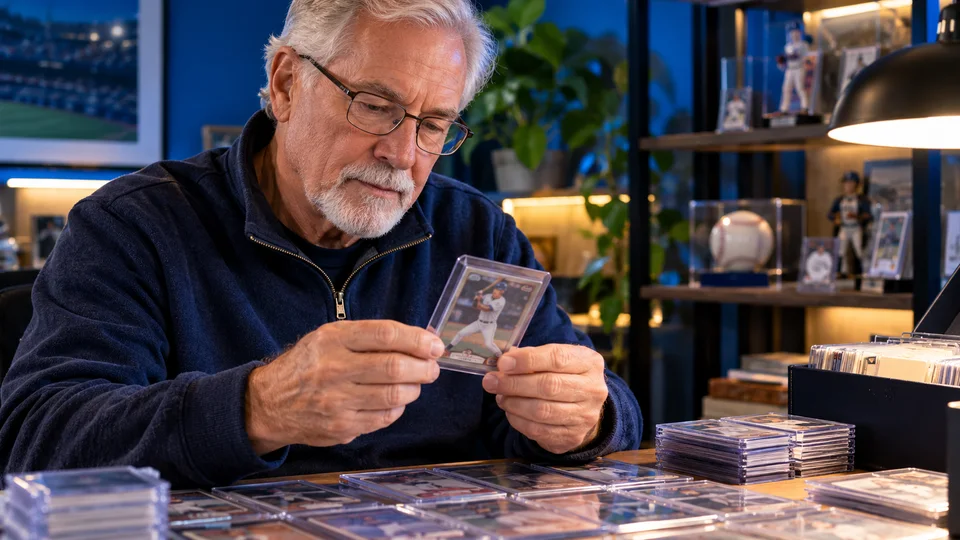
Planning your first show: a visitor checklist
Choose a show that suits your interests, confirm the practical details and keep the organizer’s information handy before you travel.
Read guide : Planning your first show: a visitor checklist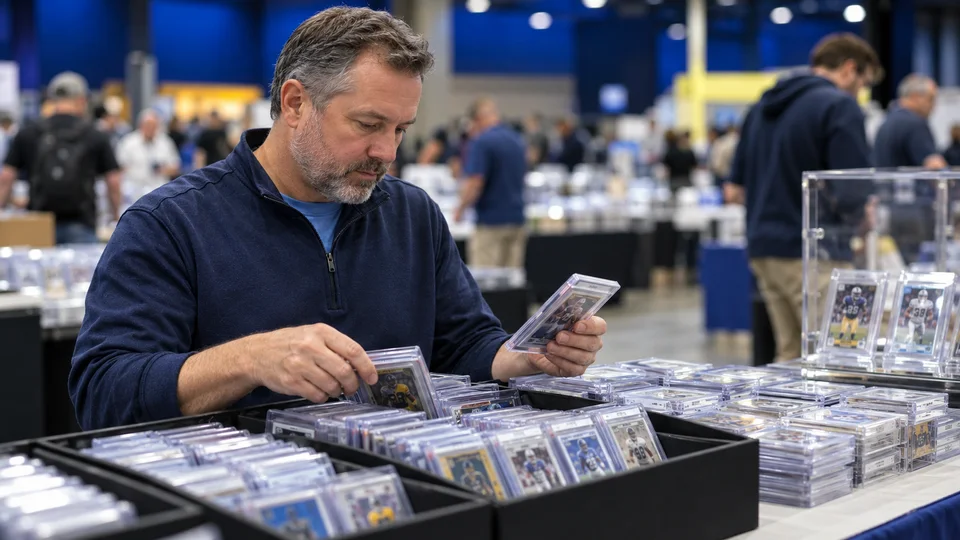
Preparing to sell at a card show: a seller checklist
Confirm your seller application, table equipment, setup time and organizer terms before booking a place at a card show.
Read guide : Preparing to sell at a card show: a seller checklist
Selling at a card show: table setup and pricing without guesswork
How to sell at a card show: read the dealer terms, plan your stock, set up a clear table, price from recent sales, handle trades and payment, and pack out safely.
Read guide : Selling at a card show: table setup and pricing without guesswork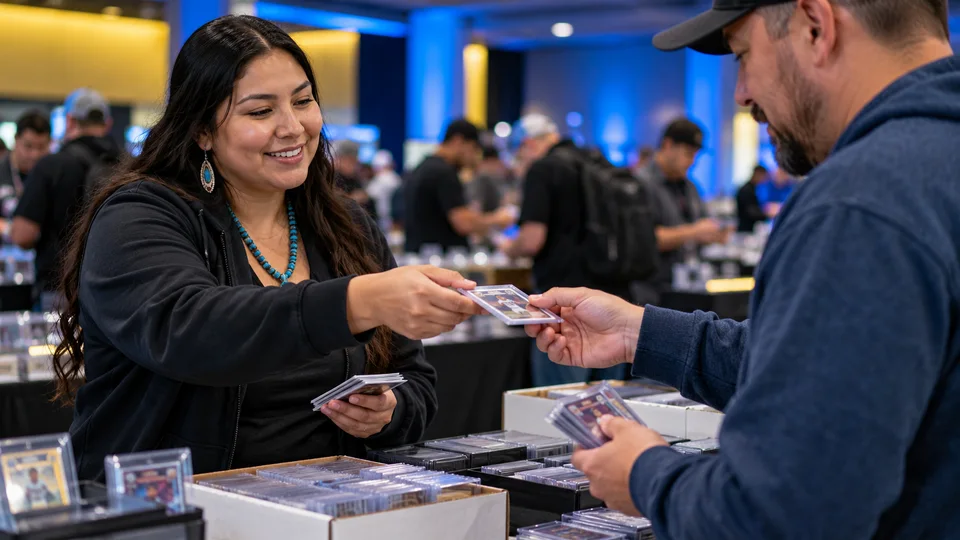
Preparing cards for grading: what to check before you submit
Before you submit a card for grading, decide if it is worth it, check centering, corners, edges and surface, protect it, and learn the service terms and timing.
Read guide : Preparing cards for grading: what to check before you submit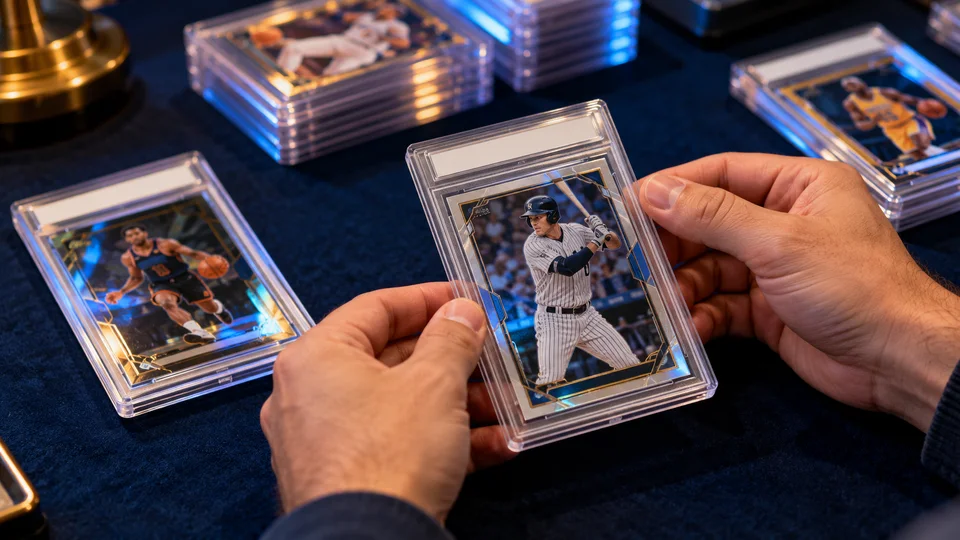
Card show autograph signings: how they work and how to prepare
How autograph signings work at a card show: ticketed and free sessions, what to bring, authentication, good etiquette and how to protect signed items afterward.
Read guide : Card show autograph signings: how they work and how to prepare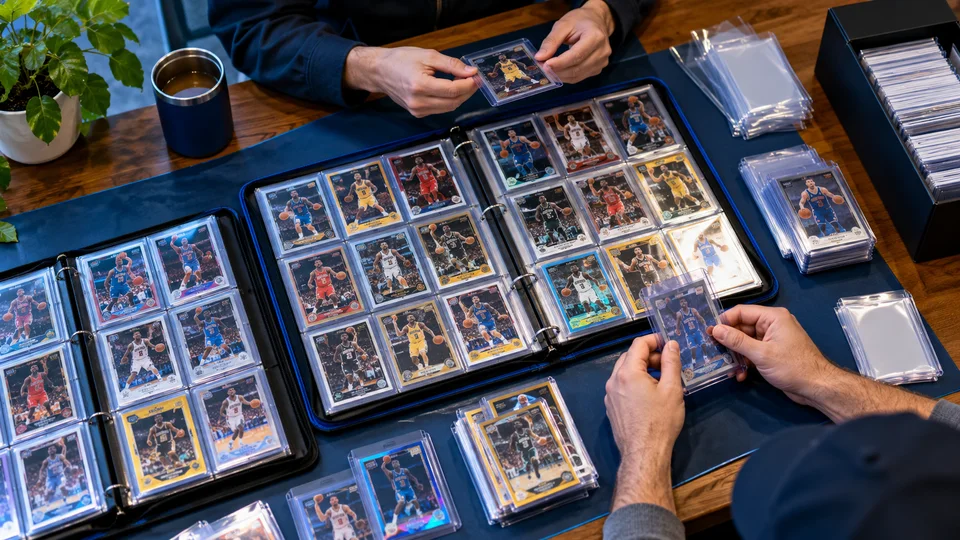
Card Show Dealers: How to Find, Evaluate and Buy From Them
Learn how to find and evaluate card show dealers, read raw vs graded cards, negotiate fair prices and follow trusted dealers to monthly shows.
Read guide : Card Show Dealers: How to Find, Evaluate and Buy From Them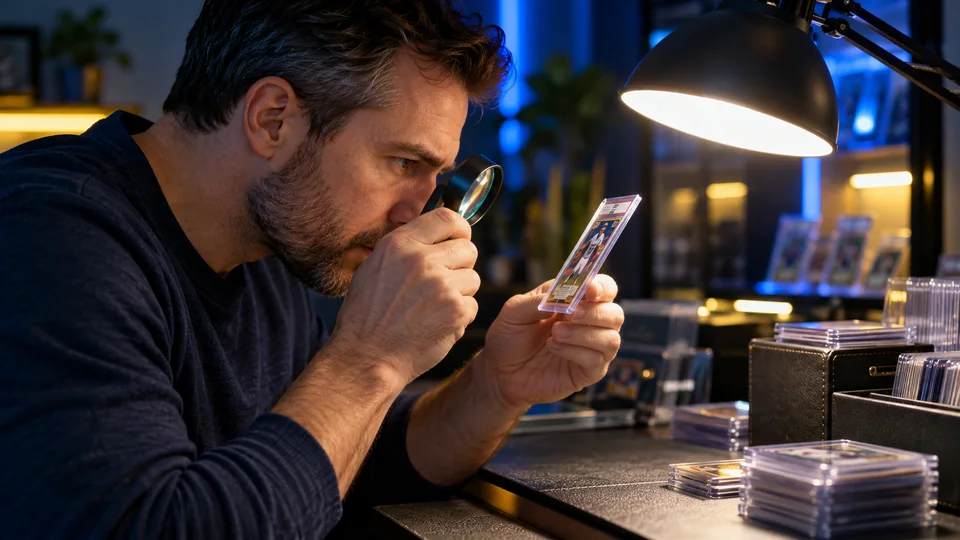
Card Shows: The Complete Guide to Finding and Enjoying Them
Card shows explained: sports, TCG and mixed events, how to find upcoming shows by state and date, what to bring, early entry and etiquette.
Read guide : Card Shows: The Complete Guide to Finding and Enjoying Them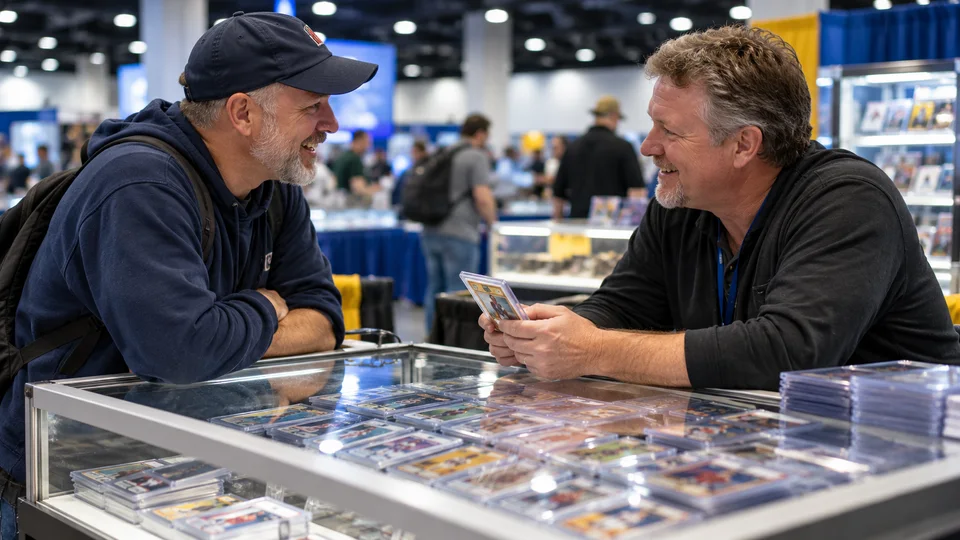
How to Become a Card Show Dealer: A Practical Starter Guide
How to become a card show dealer: start small, choose shows, set up your table, build inventory, handle payments and safety, and grow a regular circuit.
Read guide : How to Become a Card Show Dealer: A Practical Starter Guide
Pokémon and TCG Card Shows: What to Expect and How to Find Them
Pokémon card shows and TCG card shows explained: singles vs sealed, trade nights, grading, family tips, safe trading and how to find TCG events.
Read guide : Pokémon and TCG Card Shows: What to Expect and How to Find Them