
The weekend field guide
Preparing cards for grading: what to check before you submit
Before you submit a card for grading, decide if it is worth it, check centering, corners, edges and surface, protect it, and learn the service terms and timing.
To prepare a card for grading, first decide whether the card is worth the cost and the wait, then look closely at its centering, corners, edges and surface, protect it carefully and read the grading service's rules for submissions, fees, declared value and turnaround. Grading adds an outside opinion of condition, so a little preparation pays off.
This guide is for collectors who are thinking about grading for the first time and for sellers who want to understand what buyers see. It covers why people grade, picking cards, inspecting condition, handling, on-site and mail-in submissions, paperwork and what to do afterward. It is general information, not a promise about any grade. Services set their own standards and prices, so confirm the current terms with the service itself.
Why people grade cards
A grading service examines a card, assigns a grade for its condition and seals it in a protective holder. Buyers often treat a graded card as easier to trust and compare, and it protects a card from handling. Collectors also grade cards they plan to keep, to document condition.
Grading is not always worth it. It costs money, takes time and does not change the card itself. A grade lower than you hoped can reduce what a card sells for compared with an unopened expectation, so choose cards carefully.
Choose which cards to submit
Think about demand. Cards of popular players, key rookies, sought-after sets or scarce versions are more likely to benefit. Think about condition: a card with clear flaws often does not justify the cost. Look at recent sales of graded copies of the same card to see whether the difference in value is worth it, and keep in mind that results change.
Be realistic about your own eye. Many cards that look perfect at arm's length show flaws under close inspection. If you are unsure, ask a trusted dealer for an honest opinion at a card show.
Inspect condition in good light
Use a bright, even light and a clean, soft surface. A loupe or magnifier helps. Look at each of the four areas graders consider.
Centering
Check whether the image sits evenly within the borders on the front and back. Uneven borders can lower a grade even when everything else is clean.
Corners and edges
Look for rounding, fraying, whitening or tiny dents on the corners, and for chipping along the edges. Tilt the card to see any dull spots.
Surface
Tilt the card under the light to find scratches, print lines, stains, dents or loss of gloss. Look at both sides. Fingerprints can be mistaken for flaws, so handle carefully and never rub a card.
Handle and protect the card
Wash and dry your hands, and handle cards by the edges. Do not clean a card with chemicals or try to repair it, because attempts to improve a card can be treated as damage or alteration. Put the card in a soft sleeve and then a semi-rigid holder as the service instructs, and keep it flat and dry.
Store cards away from heat, light and humidity until you submit them. Use the packaging that the service recommends for shipping or for handing in at a show.
On-site and mail-in submissions
Some card shows host grading services that accept submissions at the event, and others allow you to submit by mail or through a dealer. The terms differ: fees, limits, which levels of service are offered, whether you must preregister and how long it takes. Confirm each of these with the service itself, because they change and we do not publish them here.
Ask what you must bring, how the service wants cards sleeved, what you will be asked to declare and how you will get your cards back. Check whether the organizer limits onsite submissions or requires you to register in advance, and see our guide to selling at a card show if you plan to sell afterward.
Paperwork, value and records
Most services ask you to fill out a form listing each card and a declared value. Be accurate; the value may affect the service level and insurance during shipping. Photograph each card on the front and back before you submit and keep a copy of the list.
Keep your receipts and tracking information. Note the date, the service level and the expected turnaround so that you can follow up if needed.
After grading
When your cards come back, compare each grade with your expectations and keep notes about what you learned, since patterns help you choose better next time. Leave graded cards in their holders, store them upright away from heat and light, and handle them gently.
If you sell a graded card, describe it using the grade and the service name exactly as printed, and give buyers a clear photograph of the front, the back and the label. Honest descriptions make future sales easier.
Frequently asked questions
Is grading worth it for every card?
No. It tends to help with popular or scarce cards in strong condition. For common cards, the cost often exceeds any difference in value.
Can I clean a card before I submit it?
Do not use chemicals or try to repair a card. Gently removing dust with a soft cloth is different, but when in doubt, leave it alone.
How long does grading take?
It varies by service, service level and current demand. Ask the service for its current timing before you submit.
What if I disagree with the grade?
Services have their own processes. Read their policy on reviews or resubmission before you decide, and keep in mind that results can differ on a second look.
Do I need to bring my own holders to a show?
Requirements differ. Ask the service or the organizer what to bring and how they want cards sleeved.
Should I grade before I sell?
Sometimes. Compare recent sales of graded and ungraded copies, subtract the costs and the wait, and decide whether the difference is worth it for that card.
Put your plan into motion
Find your next show.
Use the listing's official source to confirm the latest dates, public hours and entry rules.
Find shows in this directoryKeep planning
More useful guides
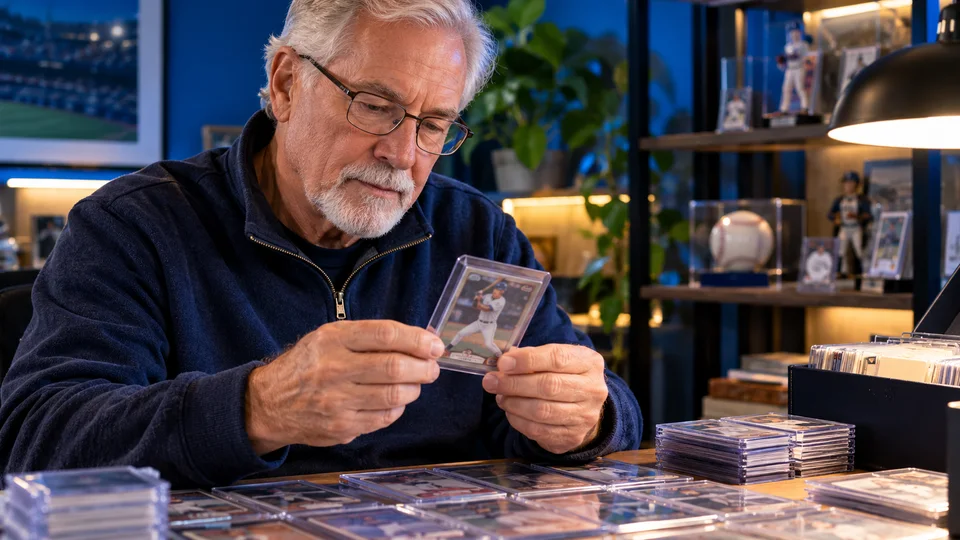
Planning your first show: a visitor checklist
Choose a show that suits your interests, confirm the practical details and keep the organizer’s information handy before you travel.
Read guide : Planning your first show: a visitor checklist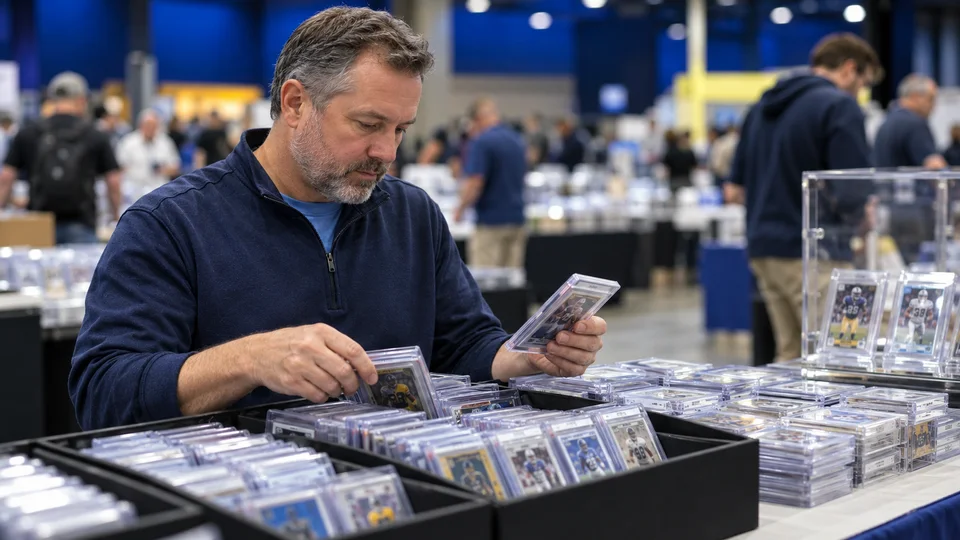
Preparing to sell at a card show: a seller checklist
Confirm your seller application, table equipment, setup time and organizer terms before booking a place at a card show.
Read guide : Preparing to sell at a card show: a seller checklist
Selling at a card show: table setup and pricing without guesswork
How to sell at a card show: read the dealer terms, plan your stock, set up a clear table, price from recent sales, handle trades and payment, and pack out safely.
Read guide : Selling at a card show: table setup and pricing without guesswork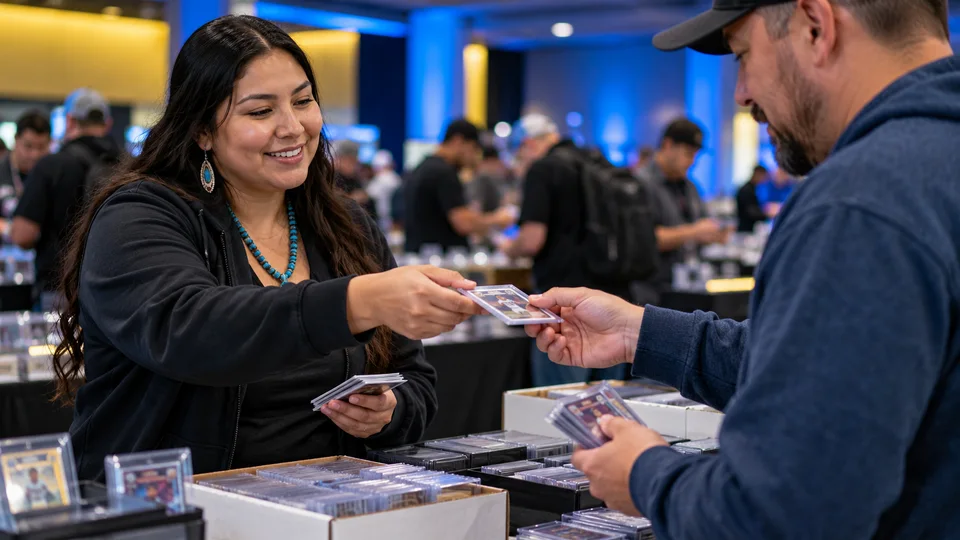
Card show autograph signings: how they work and how to prepare
How autograph signings work at a card show: ticketed and free sessions, what to bring, authentication, good etiquette and how to protect signed items afterward.
Read guide : Card show autograph signings: how they work and how to prepare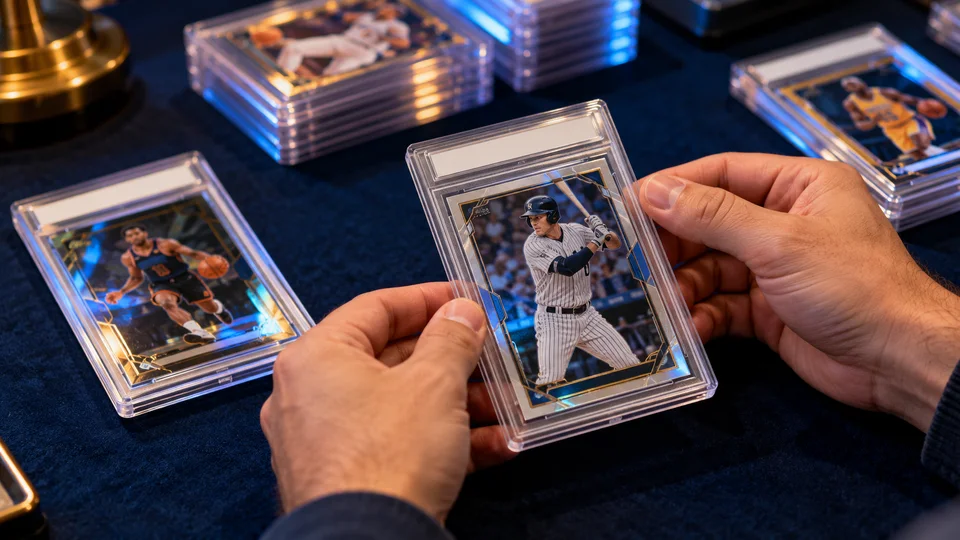
Buying and trading at a card show: a careful buyer's guide
How to buy and trade cards at a card show: set a plan, inspect condition, spot fakes, compare prices, negotiate politely and keep records of every purchase.
Read guide : Buying and trading at a card show: a careful buyer's guide
Card Show Dealers: How to Find, Evaluate and Buy From Them
Learn how to find and evaluate card show dealers, read raw vs graded cards, negotiate fair prices and follow trusted dealers to monthly shows.
Read guide : Card Show Dealers: How to Find, Evaluate and Buy From Them
Card Shows: The Complete Guide to Finding and Enjoying Them
Card shows explained: sports, TCG and mixed events, how to find upcoming shows by state and date, what to bring, early entry and etiquette.
Read guide : Card Shows: The Complete Guide to Finding and Enjoying Them
How to Become a Card Show Dealer: A Practical Starter Guide
How to become a card show dealer: start small, choose shows, set up your table, build inventory, handle payments and safety, and grow a regular circuit.
Read guide : How to Become a Card Show Dealer: A Practical Starter Guide
Pokémon and TCG Card Shows: What to Expect and How to Find Them
Pokémon card shows and TCG card shows explained: singles vs sealed, trade nights, grading, family tips, safe trading and how to find TCG events.
Read guide : Pokémon and TCG Card Shows: What to Expect and How to Find Them